government · London / England (national platform)
Defra National Land Data Platform — GeoEP
Flagship ProgrammeArchitected the conceptual, logical and physical data model underpinning Defra's national land data platform for England — unifying 6 Arm's Length Bodies and 300–500 million feature rows into one authoritative model, governed by a 49-element UK GEMINI 2.3 metadata standard that cut land-data discovery from weeks to minutes. On the physical side, designed an open-standards serving architecture that cut storage and serving cost by roughly an order of magnitude versus the proprietary platform it replaced — with no loss of resolution or interoperability.
The Challenge
The Problem We Were Asked to Solve
Imagine needing a specific piece of land data from the government — and being told it will take a month to find it, because six different agencies each hold a piece of it in incompatible formats. That was the situation before this programme.
Defra's national land data platform needed to rationalise land data spread across six Arm's Length Bodies (RPA, EA, NE, APHA, FC, Forest Research) — each using different classification schemes, attribute names, and coordinate reference systems, with no common discovery mechanism.
Key technical challenges included cross-ALB taxonomy harmonisation, achieving consistent metadata coverage across 300–500 million feature rows, simultaneous compliance with UK GEMINI 2.3, ISO 19115, INSPIRE, and UK GDPR requirements, resolving systematic data-quality issues in protected-area boundary data, and designing the full CDM/LDM/PDM stack in alignment.
Project Details
- Client
- Defra (via Informed Solutions)
- Year
- 2025
- Location
- London / England (national platform)
- Sector
- government
Tags
Our Approach
What We Built
Data Architecture Design
Designed the full data model stack — Conceptual, Logical, and Physical — for the national land data platform, covering cross-ALB data integration, attribute specifications, and tiered storage architecture. Applied Third Normal Form normalisation throughout and implemented a linkage-based architecture enabling cross-ALB record resolution without data duplication.
Metadata Framework
Designed a 49-element UK GEMINI 2.3 metadata profile — the Defra Land Profile — covering discovery, lineage, quality, distribution, and governance. Mapped the programme's metadata requirements against the profile to verified coverage, and integrated a multi-dimensional, FAIR-aligned data-quality scoring framework.
Taxonomy & Data Quality
Reconciled conflicting land-classification taxonomies across all 6 Arm's Length Bodies — national habitat, land-parcel and soils classifications — into shared code lists. Built a taxonomy discovery pipeline in Python. Resolved systematic geometry and topology issues in protected-area boundary data, eliminating false positives, and documented a material gap in land coverage for targeted acquisition.
Standards & Governance
Ensured compliance with ISO 19115, ISO 19107, ISO 19111, OGC API Records, OGC CSW, INSPIRE Metadata Implementing Rules, and DAMA DMBOK. Implemented PII separation boundaries and DPIA controls for UK GDPR compliance.
Physical Model & Serving Architecture
Designed the physical implementation on a cloud data-engineering stack — distributed processing (PySpark) for national-scale ETL, cloud-optimised columnar formats at rest, and vector tiles served through open geospatial APIs (OGC API – Features). The architecture preserves full resolution and the complete land-cover composition while driving storage and serving cost down by roughly an order of magnitude — replacing a proposed proprietary enterprise serving platform with an open-standards architecture at a fraction of the cost, with no loss of interoperability and no vendor lock-in.
The Results
What Changed
Platform Impact - Replaced a proposed proprietary enterprise serving platform with an open-standards architecture — cutting serving cost by roughly an order of magnitude, at no loss of resolution or interoperability, and eliminating vendor lock-in - Cut operational storage from multi-terabyte to sub-terabyte (~an order of magnitude) through tiered storage and a more accurate, far smaller intersection method - Cut land-data discovery from weeks to minutes — a step change in findability for land-data professionals across government - Verified coverage of the mapped programme requirements in the Alpha phase, checked against the CDM/LDM deliverables - Taxonomy conflicts across 6 ALBs reconciled into a single, auditable classification framework - False positives in protected-area boundary checks eliminated through systematic geometry and topology QC - A material gap in land coverage formally documented, enabling targeted data acquisition in the Beta phase
Technical Outputs - Fully specified Conceptual and Logical data models, delivered to DEFRA Data Modelling Standards - 49-element UK GEMINI 2.3 Defra Land Profile — ready for adoption across ALBs - A FAIR-aligned data-quality scoring framework for all integrated datasets - Production-ready Python taxonomy discovery pipeline (modular, documented, handover-ready) - Tiered PDM architecture specification for Hot/Cold/Archive storage
Work Examples
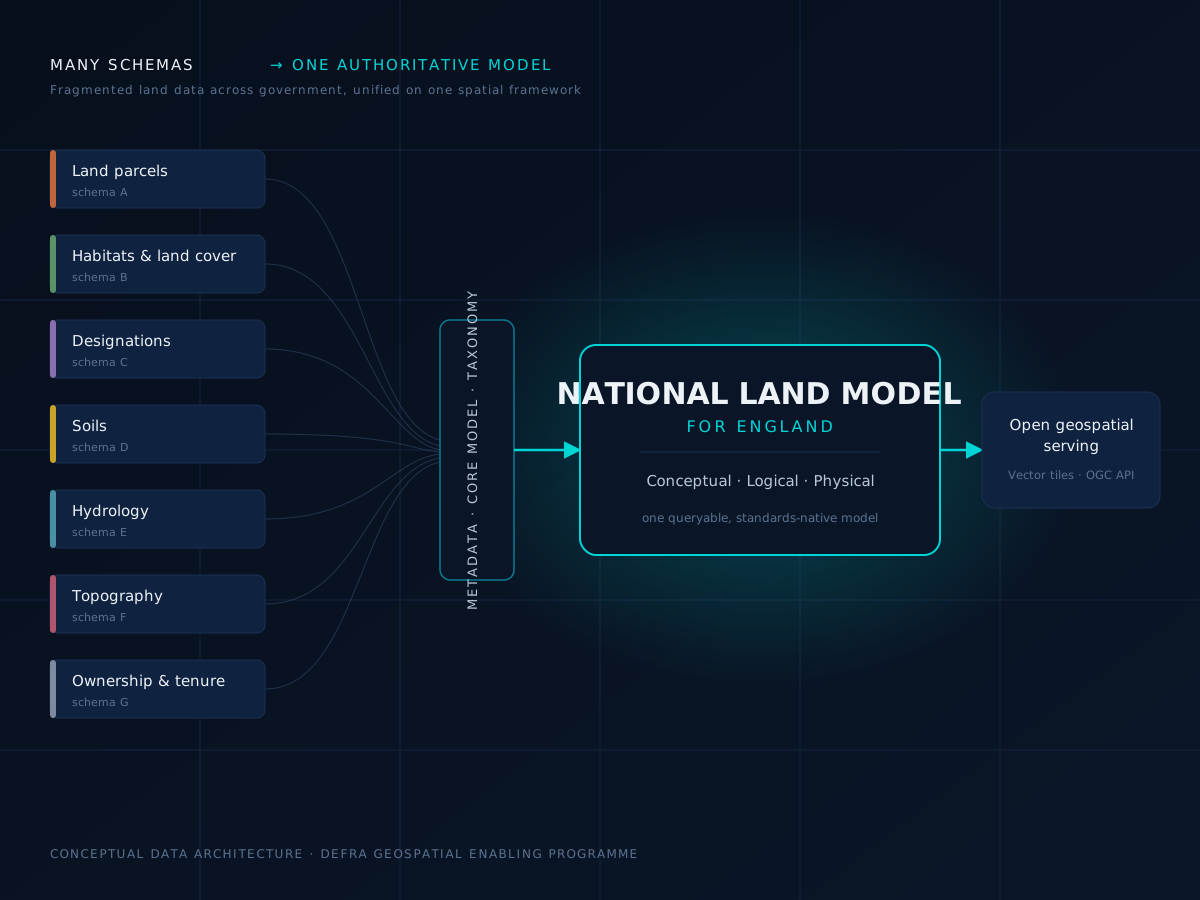
Conceptual architecture — many fragmented land schemas reconciled, via a shared metadata, core model and taxonomy, into one queryable national Land Model.
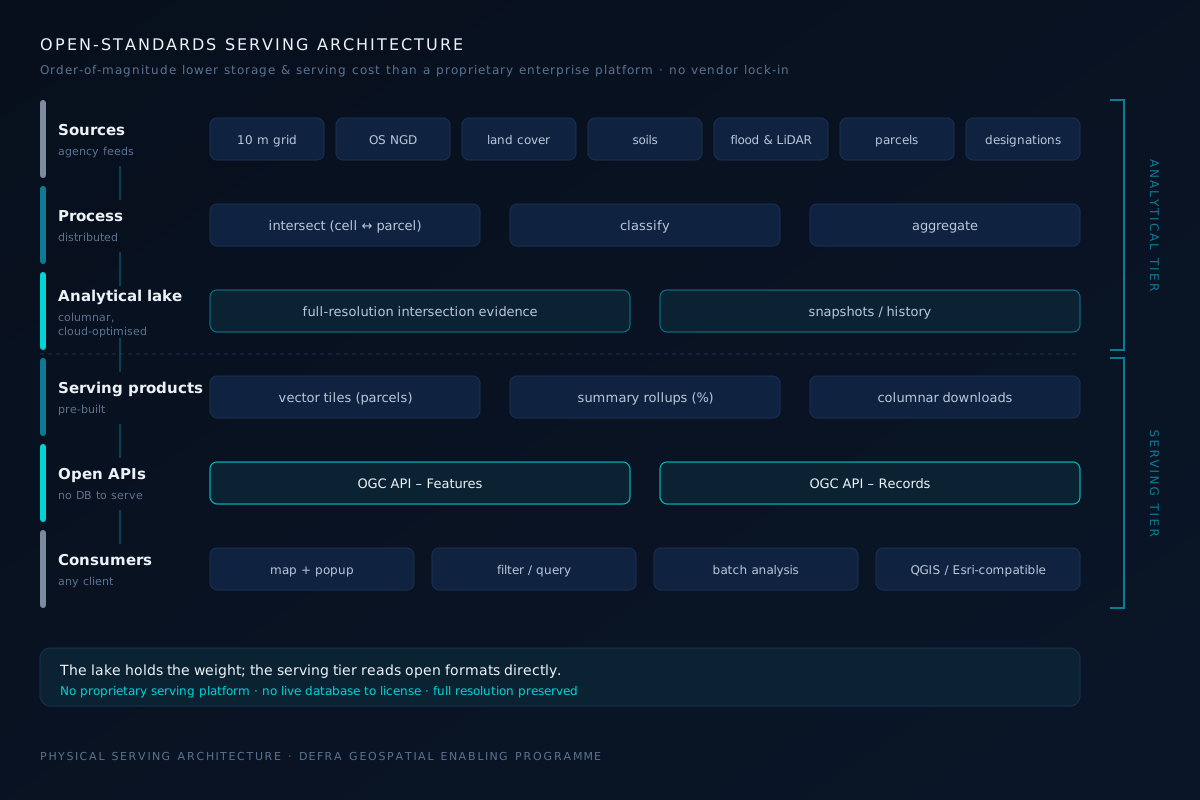
Physical serving architecture — the analytical lake holds full-resolution evidence; the serving tier reads open formats directly, replacing a proprietary platform at a fraction of the cost.
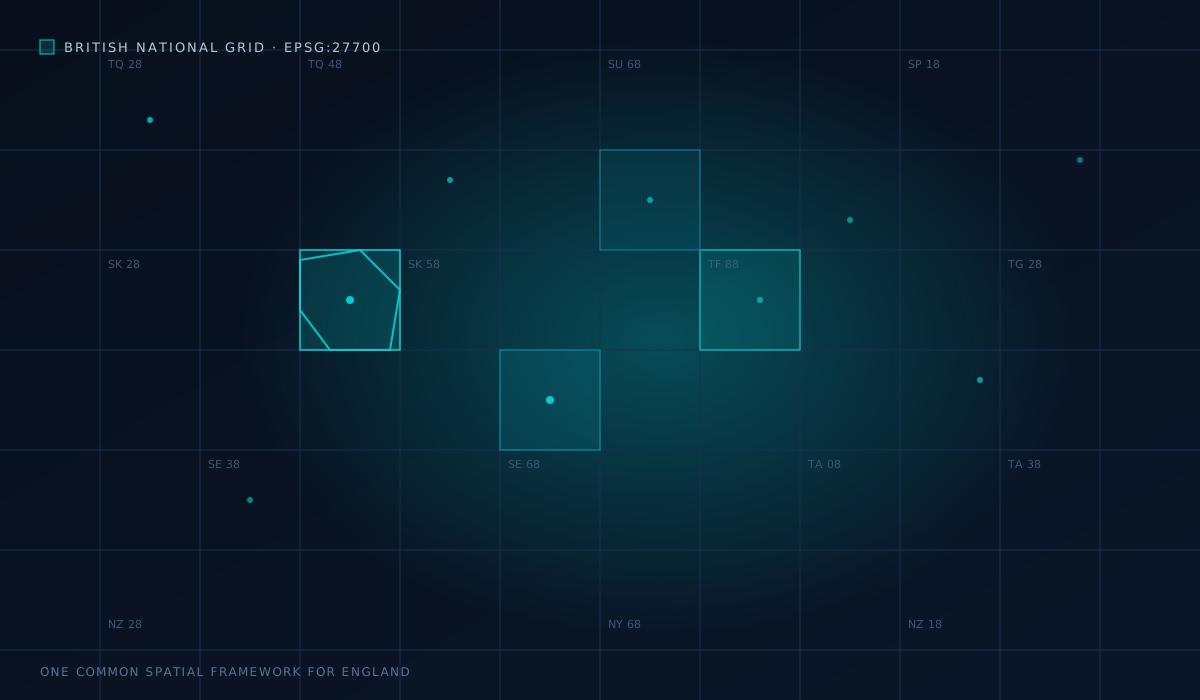
One common spatial framework — every source aligned to British National Grid (EPSG:27700) for consistent, cross-agency analysis.
Explore More