energy · North Sea — UK Continental Shelf
Acorn CCS — North Sea Carbon Capture GIS Platform
Designed and delivered the enterprise GIS platform for one of the UK's pioneer North Sea carbon capture and storage projects — 3,500+ hours consolidating geo-data across 6 work areas into a cloud system with 2 custom web applications.
The Challenge
The Problem We Were Asked to Solve
The UK's first North Sea carbon capture project needed one place to see all its geospatial data — survey results, infrastructure layouts, environmental constraints — accessible from any laptop, without installing specialist software. That system did not exist yet.
Storegga's Acorn Carbon Capture and Storage project spanned 6 distinct work areas across the North Sea, with geospatial data arriving from multiple incompatible sources: public-domain datasets, asset operator data from multiple operators, and ongoing project-specific survey deliverables. There was no common data standard, no cloud-accessible repository, and no mechanism for engineering teams, environmental specialists, and management to work from the same spatial picture.
Key challenges included harmonising multiple coordinate systems, implementing IOGP SSDM v2 compliance, delivering 24/7 cloud access for a geographically distributed team, integrating ongoing survey data across bathymetric, geophysical, geotechnical, and environmental survey types, and building purpose-built web applications tailored to CCS workflows rather than generic GIS viewers.
Project Details
- Client
- Storegga (via Petrofac Subsea Engineering)
- Year
- 2024
- Location
- North Sea — UK Continental Shelf
- Sector
- energy
Tags
Our Approach
What We Built
GIS System Design & Data Consolidation
Designed and implemented a dual-layer data architecture for the Acorn CCS programme — a collation repository for incoming survey and public-domain data, and an IOGP SSDM v2 compliant model for all project-specific and processed datasets. Established a 5-stage quality control process covering completeness, precision, accuracy, consistency, and coordinate system validation. Set up ArcGIS Online as the cloud repository with full user role management.
Survey Data Integration
Integrated survey deliverables across 9 work packages covering the full North Sea programme area. Survey types integrated: Bathymetry, Geotechnical, Environmental, and Geophysical. Also integrated public-domain data from OGA, BGS, Marine Scotland, JNCC, NOC, GEBCO, and EMODNet, alongside asset operator data.
Custom Web Applications
Built two purpose-built web applications for the programme:
Acorn General App — coverage across the Acorn area and surrounding regions, with infrastructure layers (pipelines, wells, umbilicals, structures), survey data, environmental and engineering design routes, and custom measurement, drawing, and export tools accessible from any browser.
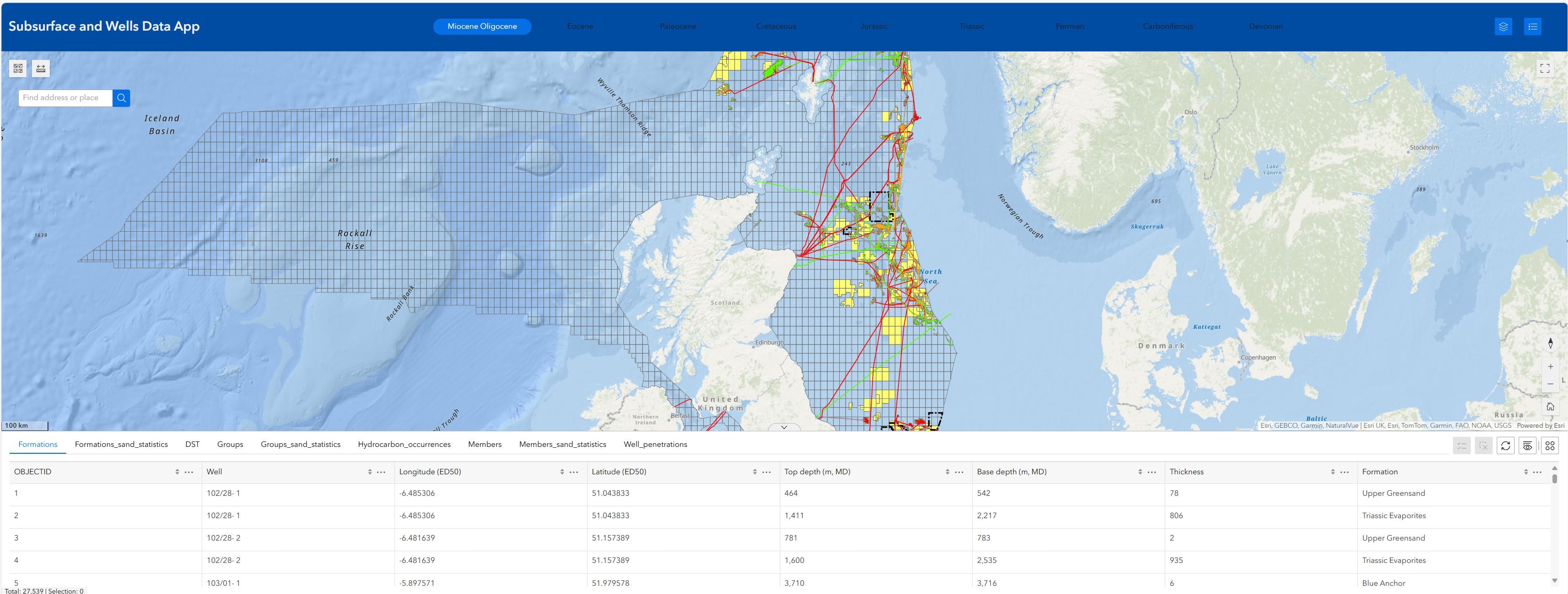
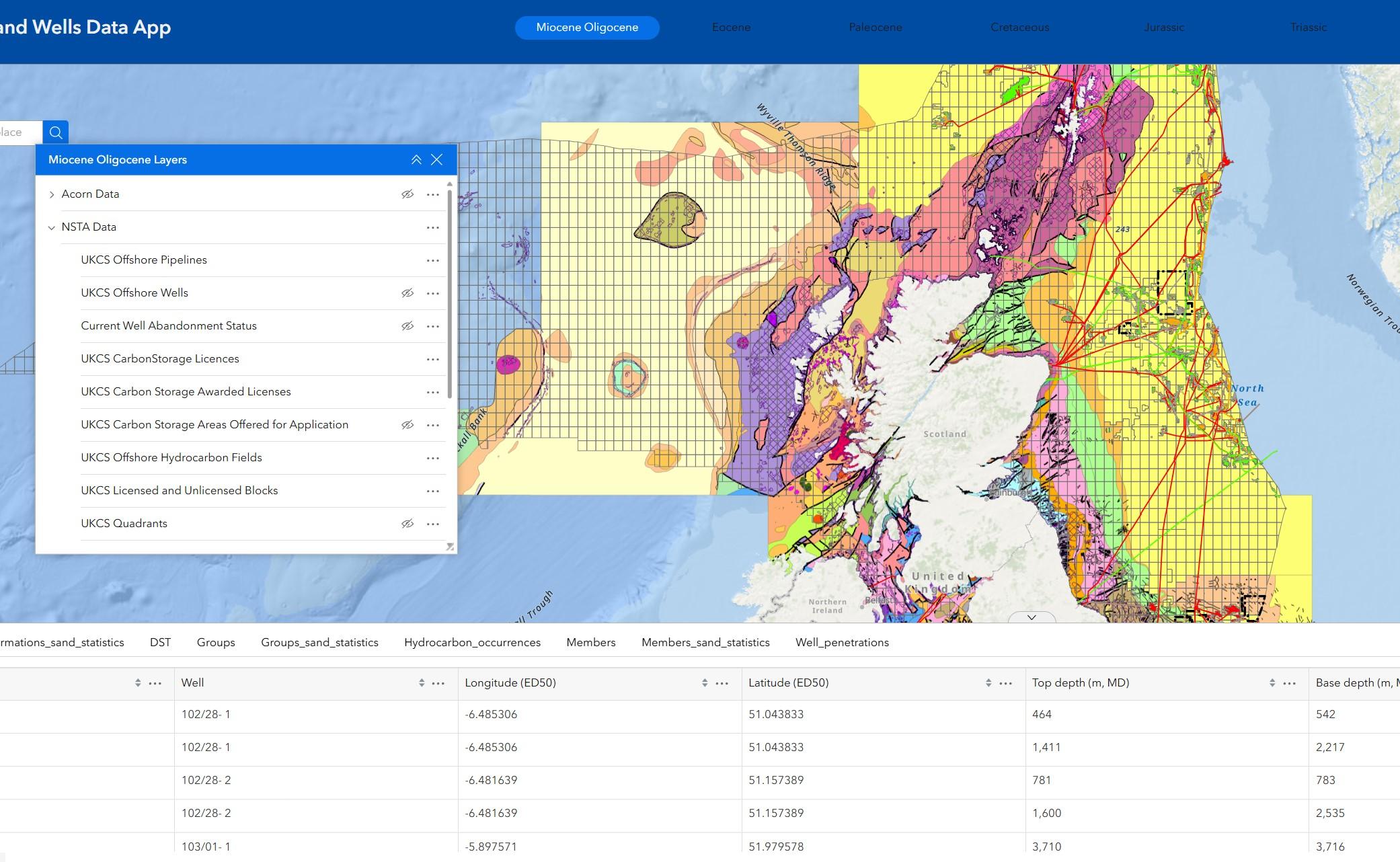
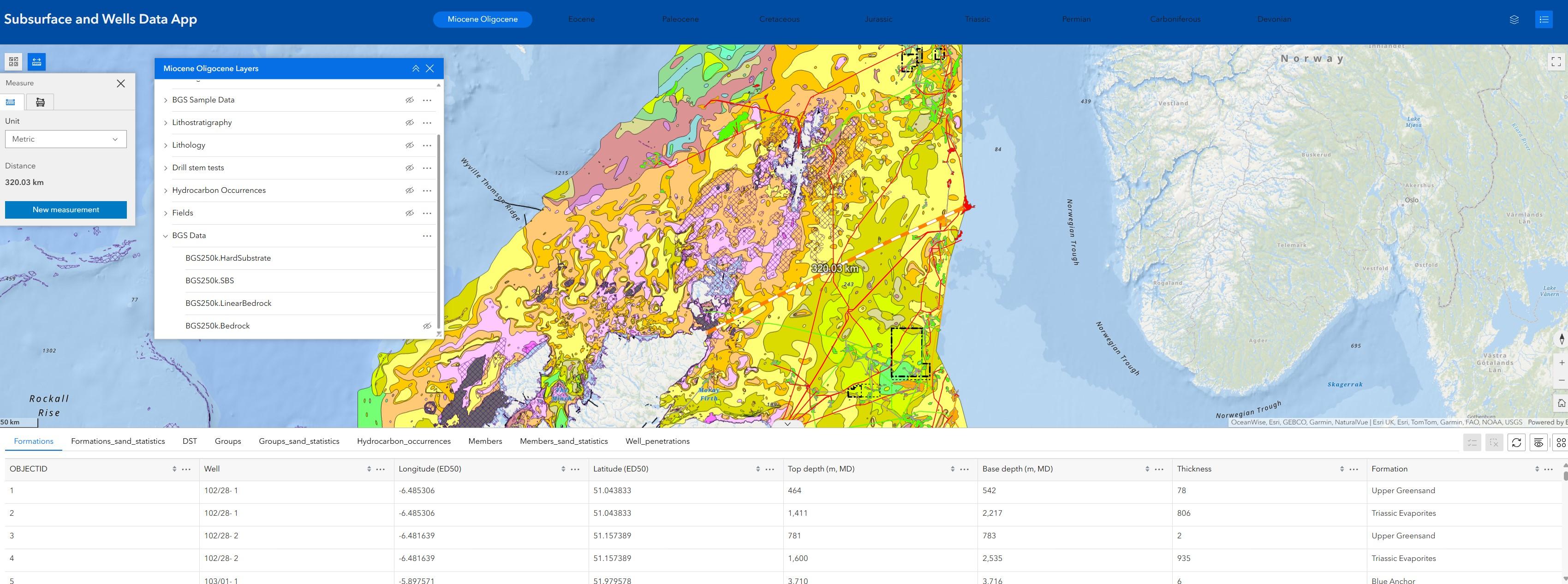
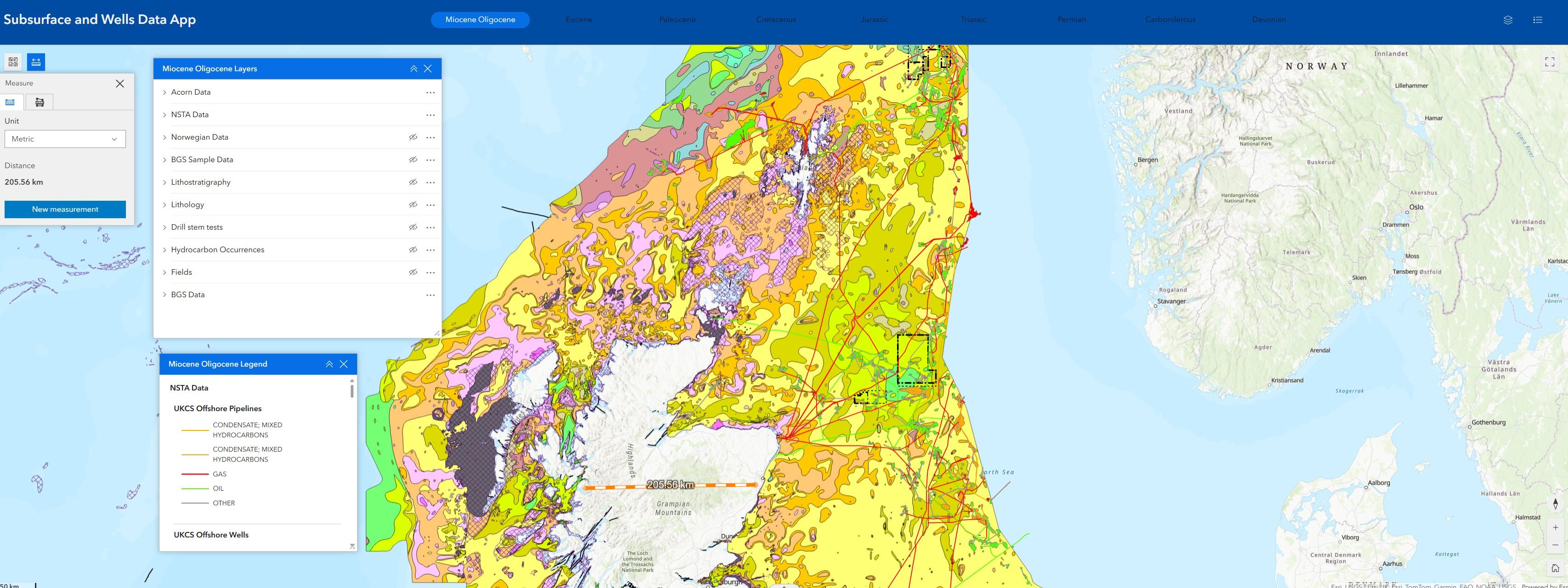
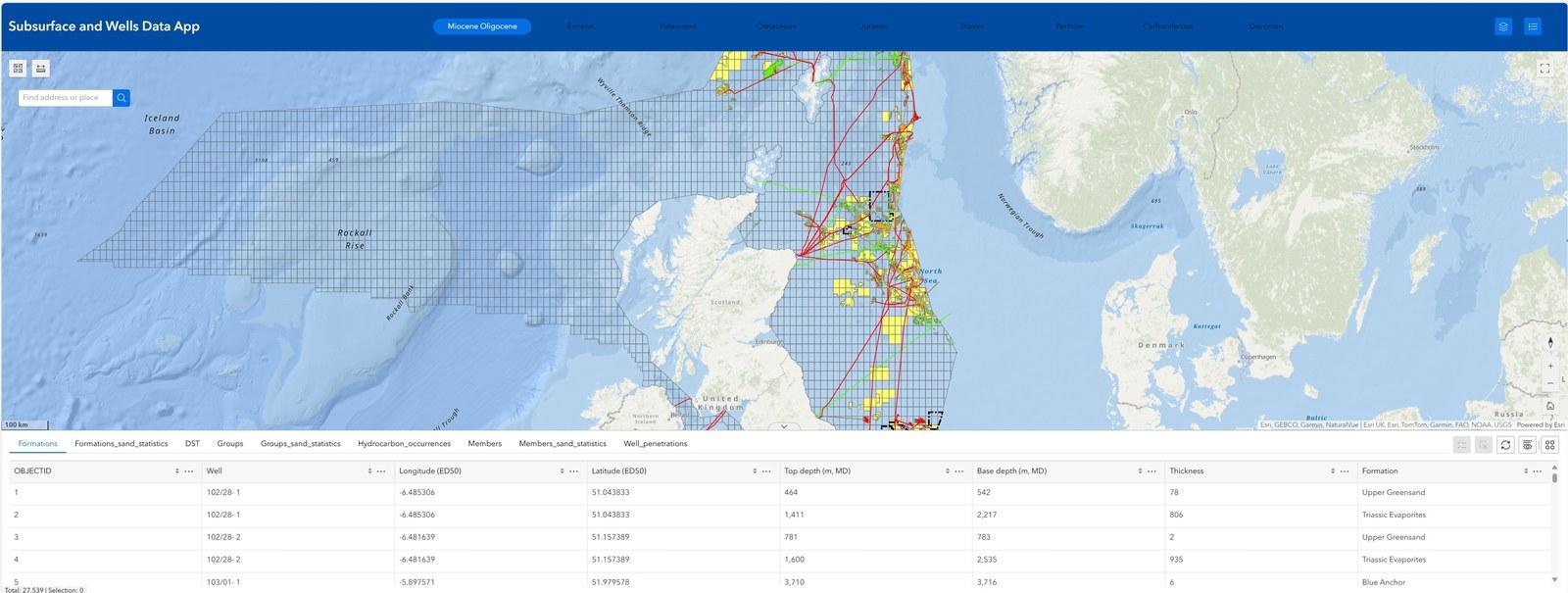
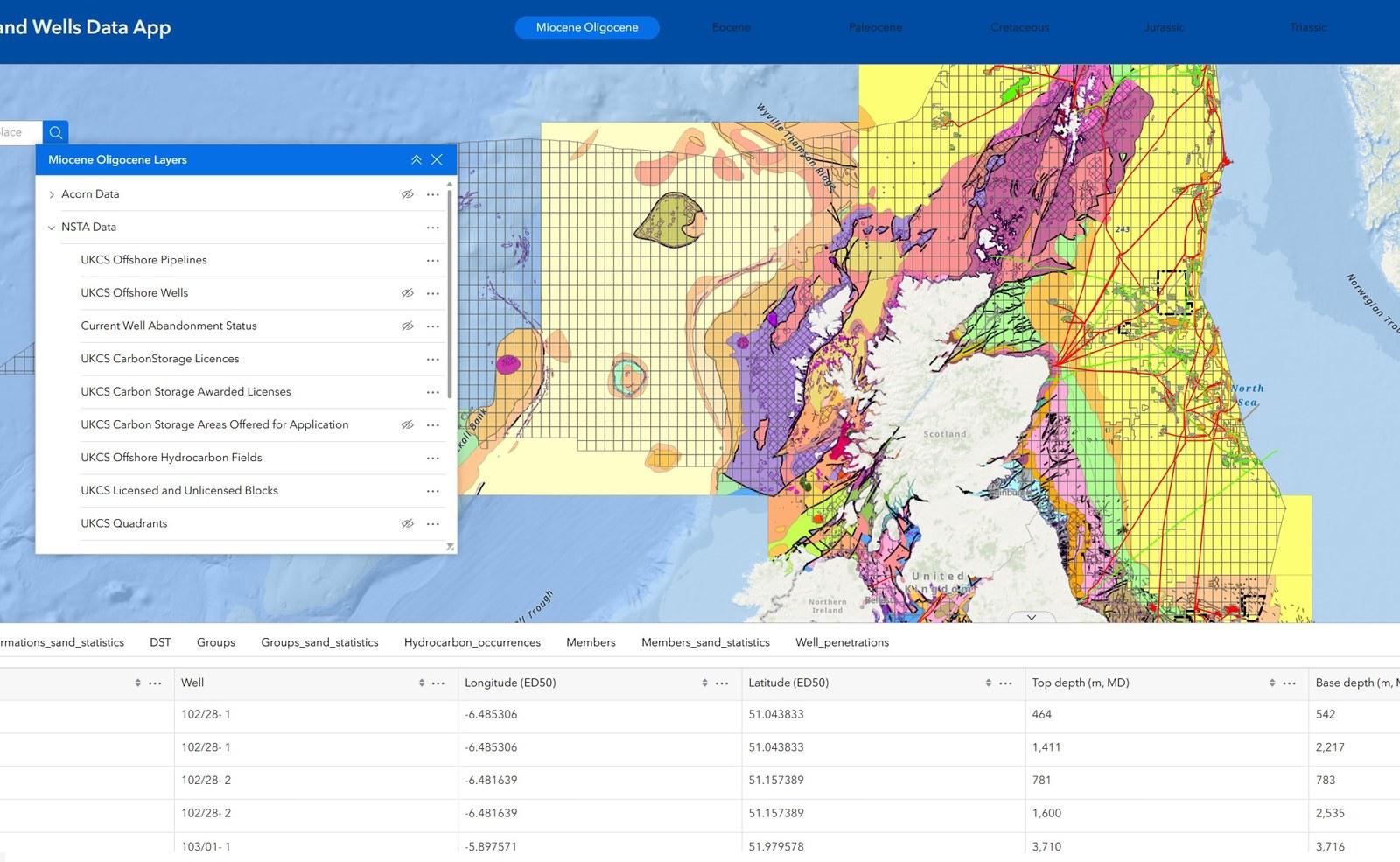
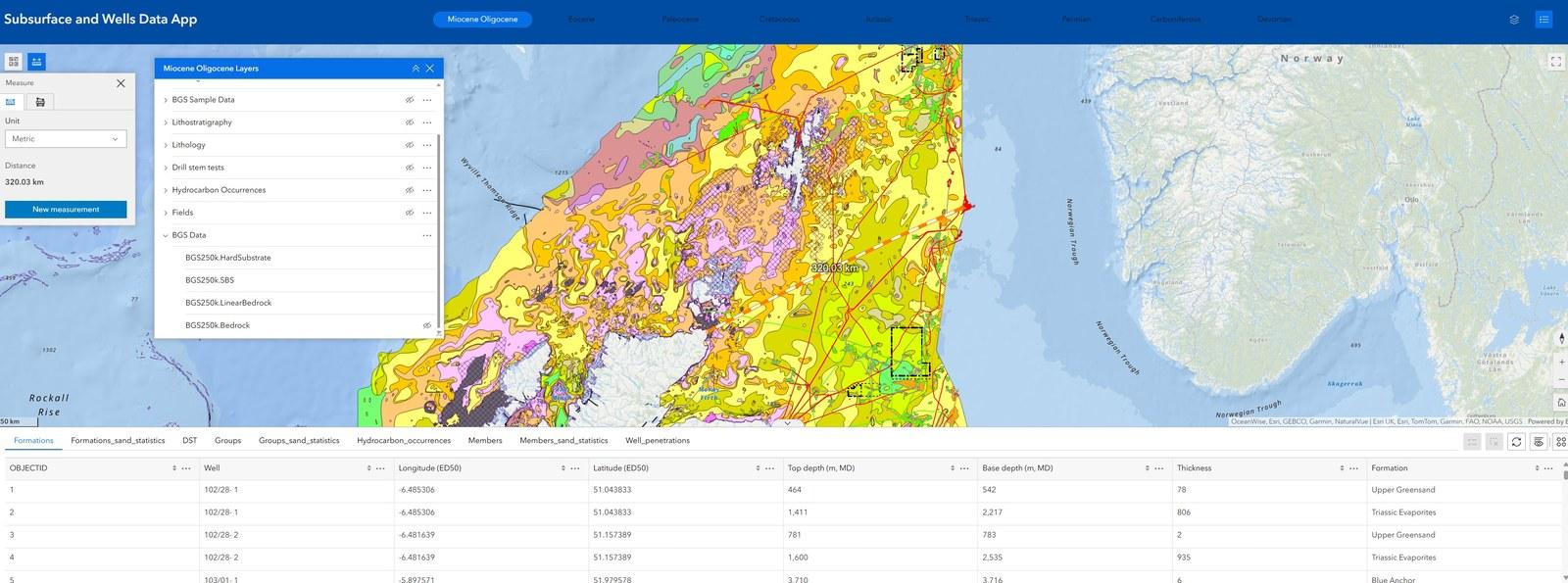
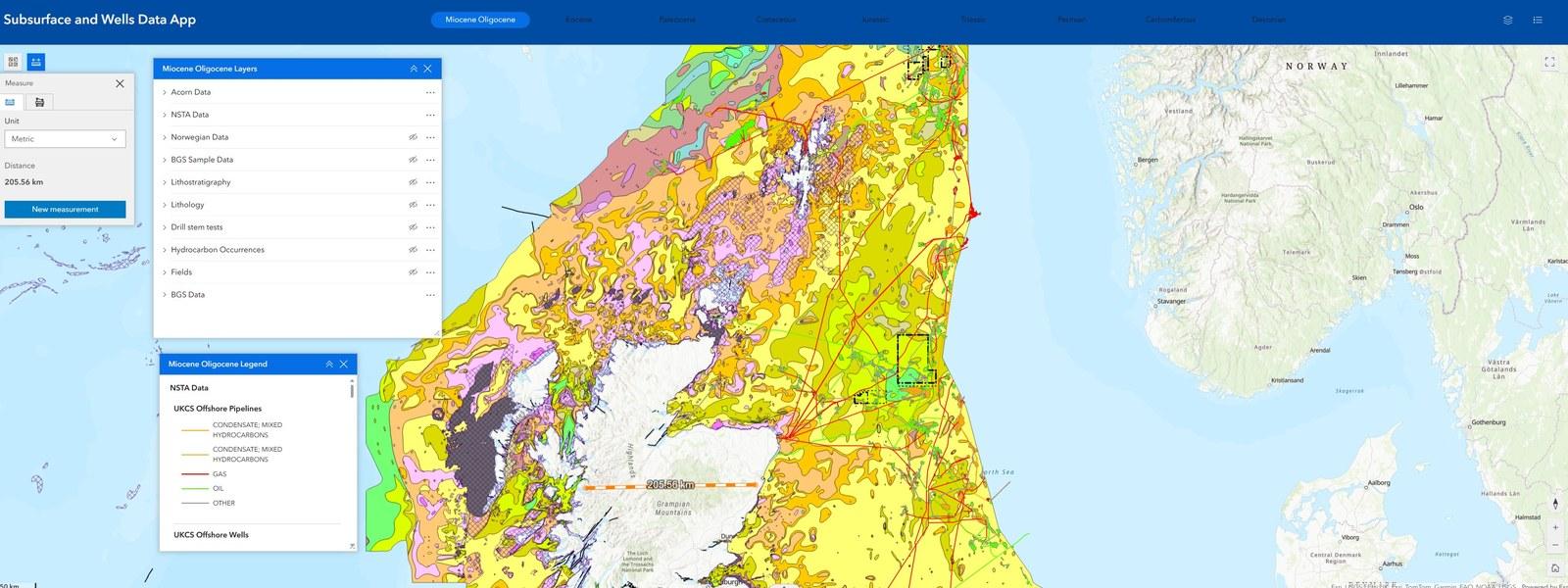
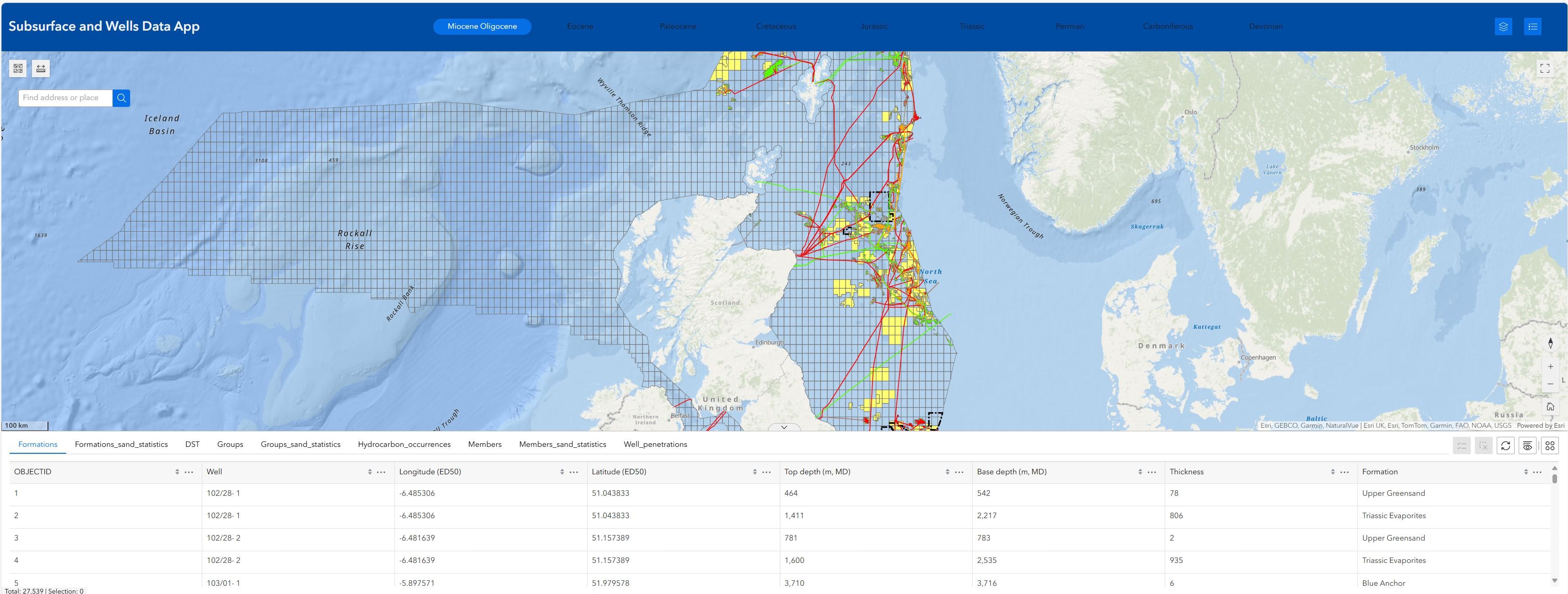
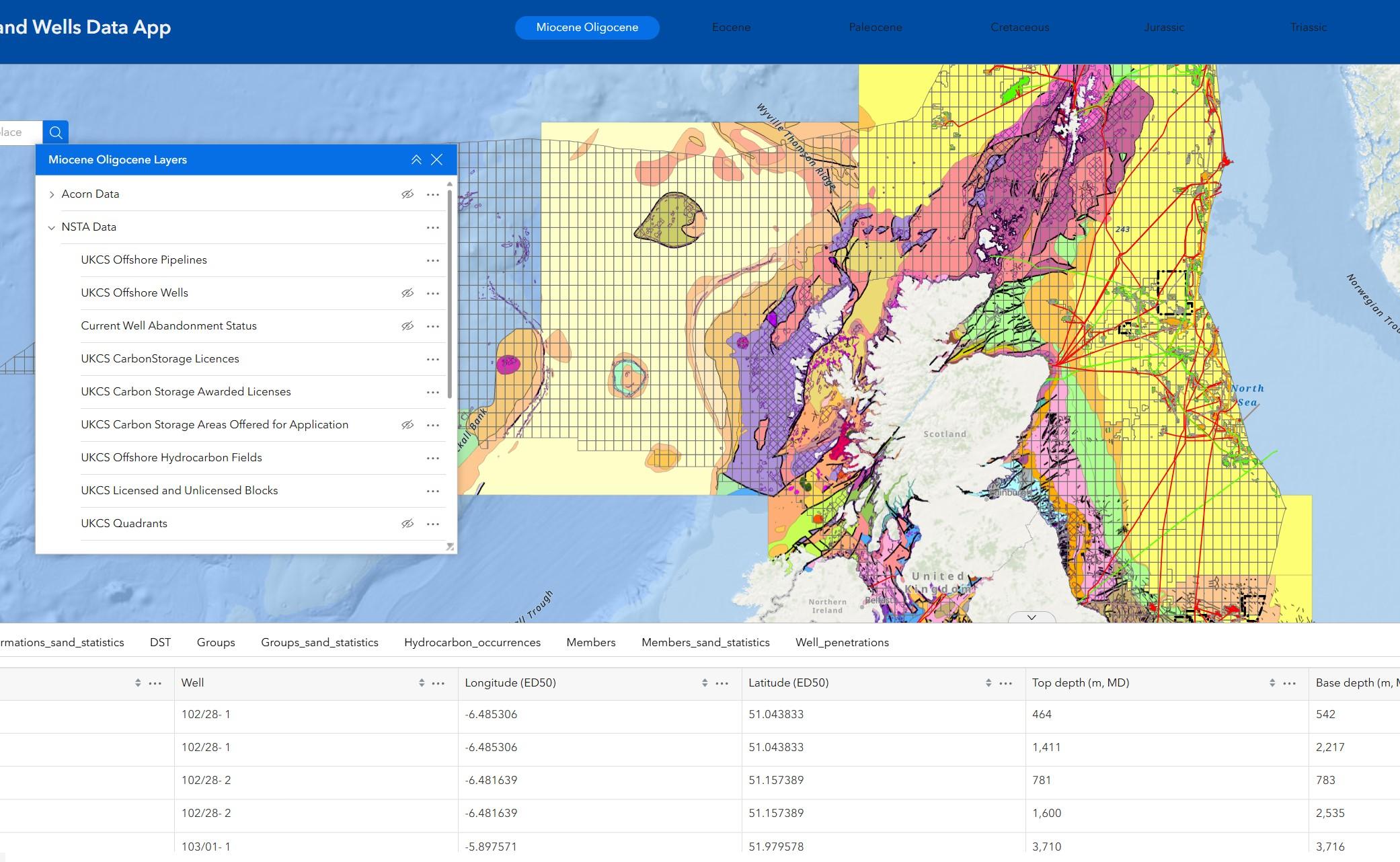
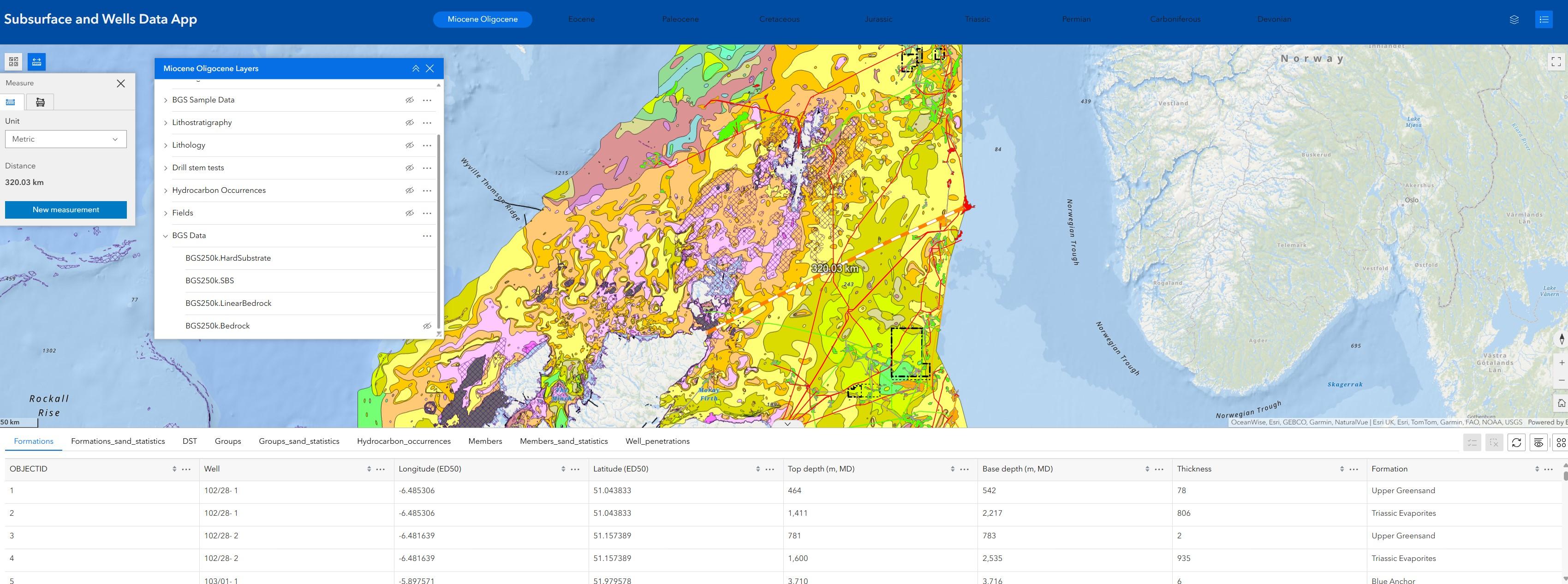
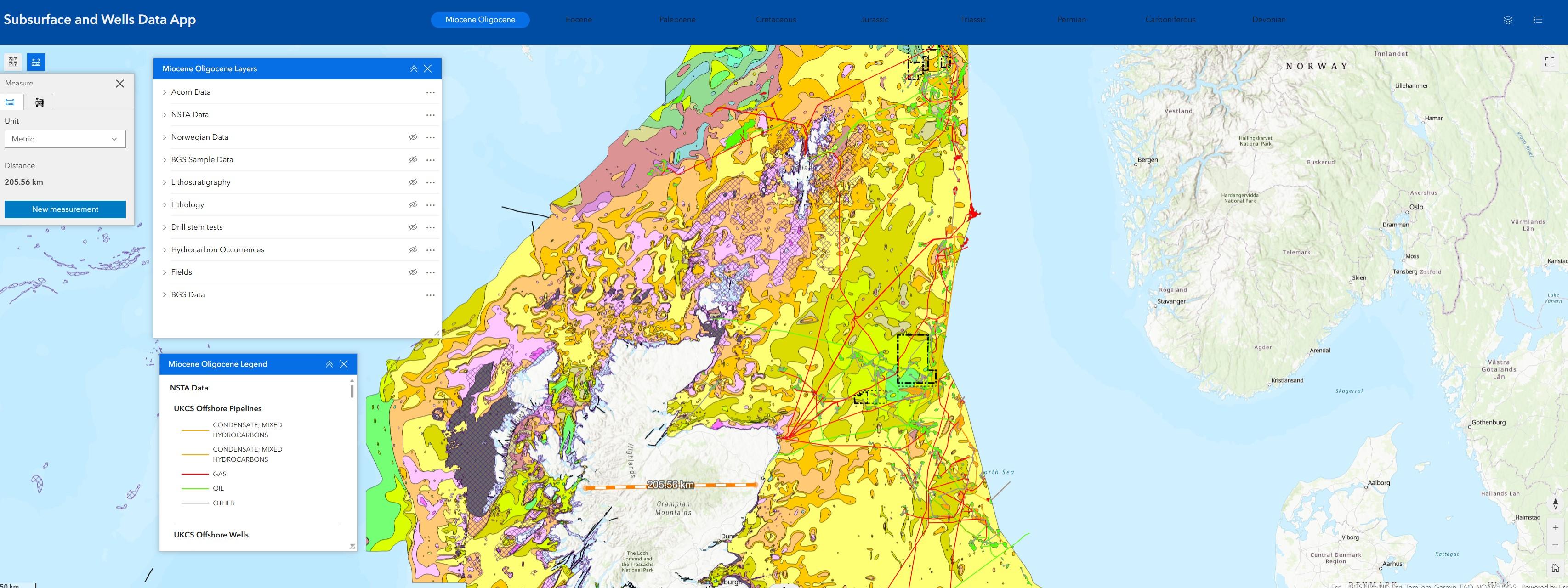
Subsurface and Wells Data App — North Sea coverage including partial Norwegian waters, with 9 geological age visualisations and 1,400+ data layers spanning lithology, stratigraphic, and infrastructure data. Includes powerful search and filtering, data export, and usage analytics.
Additional Work Area
Extended the platform to cover a prospect area, including new GIS setup and survey data collation for this additional work area.
The Results
What Changed
Operational Impact - Centralised repository: all offshore geo-data across 6 work areas accessible from a single cloud platform, eliminating data silos and inconsistent working copies - 24/7 project-wide access: engineering teams, environmental specialists, and management work from the same data — no software installation required for viewer-role users - Complex subsea datasets — geological, geophysical, infrastructure, environmental — visible in a single interactive interface - Data quality issues caught before they reached engineering workflows
Successful IOGP SSDM v2 implementation at full programme scale — first application of this standard on a UK CCS pioneer project
Delivery Scale - 3,500+ hours delivered across the engagement - 9 survey work packages planned, scoped, and integrated - 2 custom web applications built, deployed, and maintained - 6 work areas covered with full B/G/E/P data coverage - 1,400+ data layers across geological ages, infrastructure, and environmental datasets - Multiple coordinate systems (ED50 TM0, WGS84, UTM30N) harmonised
Work Examples
Explore More